Top-rated independent appliance repair across the Midwest
Freezer Repair — Book a Visit Today
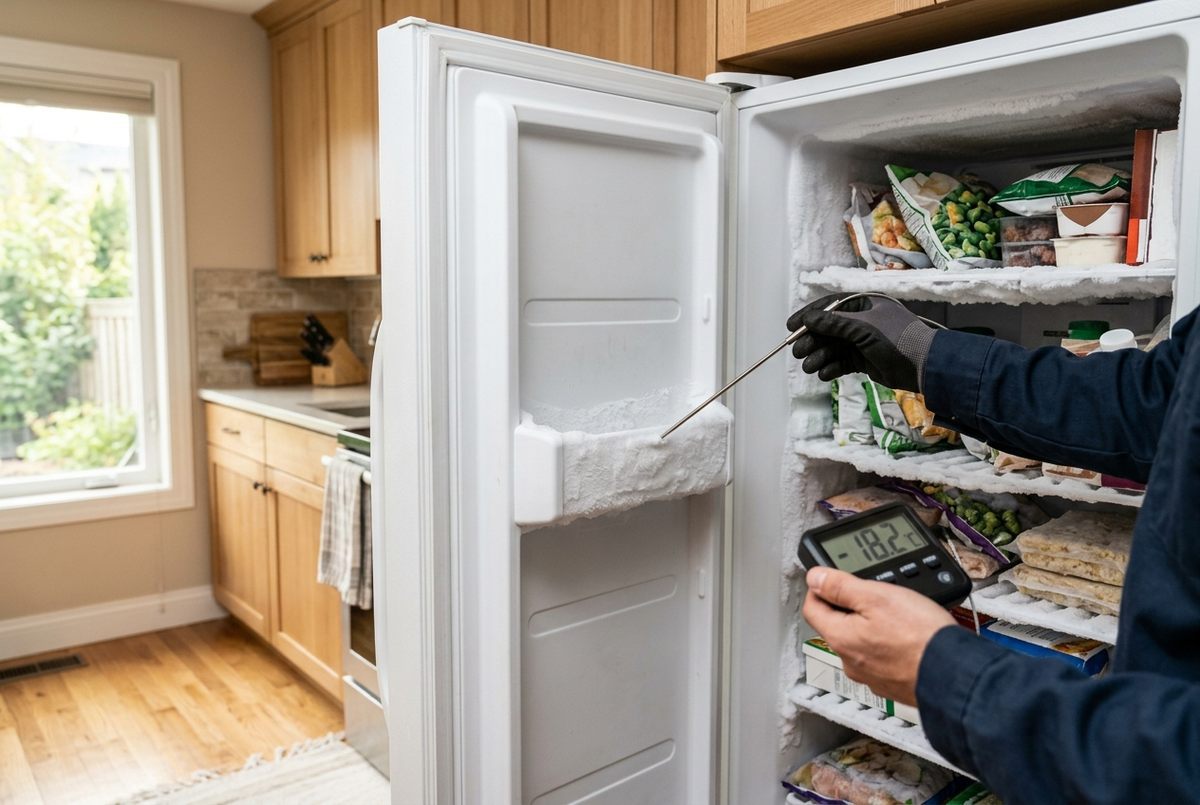
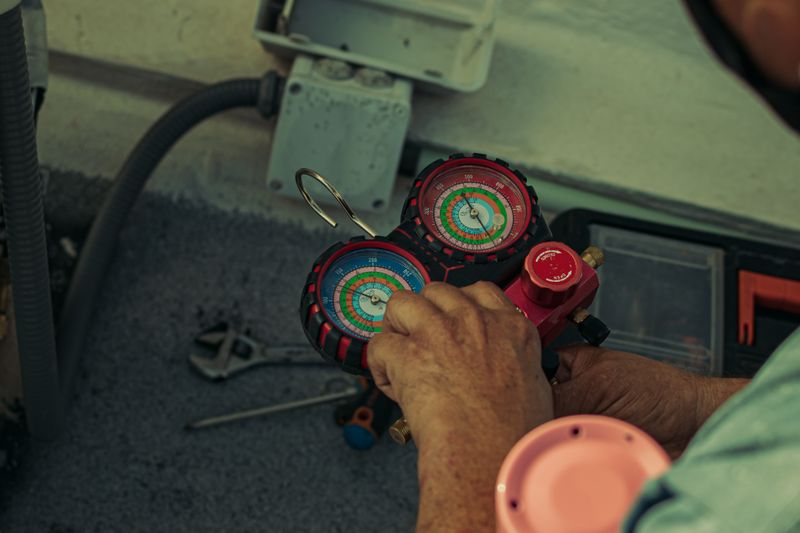
We repair freezers of all kinds, and the fastest way to start is to call us and tell us what you're hearing and seeing. Freezers fail quietly. You find out when the ice cream is soup and the frozen peas rattle like marbles. Most of what we see comes down to a few families of trouble: a frosted-over evaporator coil, a defrost heater or thermostat that quit, a condenser fan struggling under dust, a door gasket that stopped sealing, or a sealed system losing its charge. Chest freezers in Midwest basements add their own twist, since damp air and frequent lid-opening build frost fast. A visit starts with your description. Then we take temperature readings, look at airflow, and check the defrost circuit. We explain what we find before we touch a part.
Call (800) 967-1507- Real people on the phone
- 7 days a week
- Quote in writing before any work
Taking calls until 5:00 PM CT
The freezer symptoms we hear most
- Everything's soft but the light still comes on Sealed system or compressor not cooling
- There's a wall of ice on the back inside panel Defrost heater, thermostat, or timer failure
- Water keeps pooling under the chest freezer Clogged drain or a lid gasket letting warm air in
- It runs constantly and the room feels warm Dirty condenser coil or a failing condenser fan
- Loud buzzing that stops when I open the door Evaporator fan blade hitting frost or a worn fan motor
Safe things to check first
Worth a look before you call — sometimes it saves you the visit.
- 1Make sure the plug is seated all the way, and test the outlet with a lamp or phone charger.
- 2Shut the door on a dollar-sized slip of paper, then see if it pulls out with no drag.
- 3Look behind and beneath the unit for lint and pet hair blanketing the coils.
- 4Check that nobody bumped the temperature dial, and that boxes aren't blocking the interior vents.
What homeowners get from an independent shop
| Steve's Appliance Repair | Big-box repair chains | Handyman listings | |
|---|---|---|---|
| Written quote before any work | ✓ | ✕ | ✕ |
| Phones answered by people, every day | ✓ | ✕ | ✓ |
| Every major brand, gas or electric | ✓ | ✓ | ✕ |
| No manufacturer targets to hit | ✓ | ✕ | ✓ |
| Crews familiar with homes like yours | ✓ | ✕ | ✓ |
After the visit, in their words
“Two visits, one for diagnosis, one with the ordered part. Both on time, both explained clearly.”
Hannah B.Clinton Township, MI“My tenants dealt with them directly and the whole repair happened without me leaving work.”
Victor A.Lee's Summit, MO“The dryer vent was packed solid. Airflow now is night and day, and towels dry in one cycle.”
Joyce E.Carmel, INFreezer Repair — quick answers
How cold should my freezer actually be?
Around zero degrees Fahrenheit is the usual target for long-term storage. Set a separate thermometer between packages and read it after several hours. If it settles well above zero with the dial turned down, something mechanical needs attention.
Should I save the food inside?
Move anything still hard-frozen into a cooler with ice, or a neighbor's freezer. Packed food holds cold longer, so keep the door shut while you wait. If items have thawed and warmed, follow food safety guidance and throw them out.
Is frost buildup normal?
A thin layer on the walls happens, especially in humid basements. Thick sheets of ice on the rear panel or around the fan point to a defrost problem. Manual-defrost chest models need clearing by hand every so often.
My freezer is standalone in the garage. Does that matter?
It can. Some units aren't built for wide temperature swings, and an unheated garage through a Midwest winter can confuse the thermostat. We check whether the location is fighting the design before replacing parts.
Do you work on chest freezers and upright models both?
Yes, along with freezer compartments in side-by-side and top-freezer refrigerators. We're an independent shop and service all major brands. Tell us the style and roughly how old it is when you call us.
How long does a repair usually take?
Many visits wrap up the same day when the failed part is a fan, gasket, thermostat, or defrost component. Sealed-system work or an uncommon part can mean a second trip. We tell you which situation you're in.
How it works
- Step 1
Tell us the symptom
Call us or fill out the form and describe what you hear, smell, or see. An error code helps. So does a puddle. We ask the brand and rough age so the van carries the parts we are likely to need.
- Step 2
We come look
Our technician tests the machine instead of guessing: water lines, heating elements, drain pumps, control boards. Then we explain what failed in plain words before any wrench turns.
- Step 3
Repair and clean up
Common parts ride with us, so a lot of repairs finish on that first visit. Special-order parts get scheduled right away. We run the cycle with you standing there, then haul off the old part and the packaging.
- A real person answers
- Open 7 days
- Written quote before work starts
Why homeowners call us
- Hard water is our specialtyMidwest water leaves scale on everything it touches. Crusted dishwasher spray arms. Clogged ice maker lines, and washers and water heaters full of mineral buildup. We know what that grit does to valves and seals, so we treat the cause instead of the symptom.
- Basement laundry roomsBasement setups fail differently than upstairs ones, between the long drain runs, the cold concrete, and lint packed into a vent that runs through the rim joist. We check the venting and the drain path too, not only the machine, so the same problem does not come back.
- Freeze-thaw season readyGarage freezers quit in January. Ice makers stop when the supply line freezes, and dryers labor when the vent hood ices over. Seasonal swings break appliances in fairly predictable ways, and those are the first things we look at on a winter call.
- Independent, all major brandsWe are not tied to any manufacturer, so we work on whatever is sitting in your kitchen or laundry room: refrigerators, ranges, dishwashers, washers, dryers, freezers. One shop, one call, whatever badge is on the door.
- All major brands, gas & electricIndependent service on Whirlpool, LG, Samsung, GE, Maytag, Bosch, KitchenAid and the rest.
- Straight answersIf it isn't worth repairing, we'll say so, often right on the phone.
Freezer Repair
Small faults become big ones on a schedule of their own
Describe the symptoms and we'll book the visit — takes about a minute.
- A real person answers
- Open 7 days
- Written quotes
- All major brands
- Gas & electric
Rather not call? Get a free quote →